












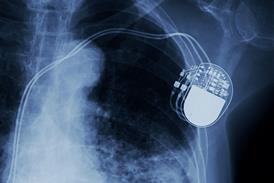






Enhancing post-market surveillance with Artificial Intelligence and predictive analytics

Abstract
Post-market surveillance (PMS) plays a critical role in ensuring the ongoing safety and effectiveness of medical devices in real-world use. However, although traditional PMS remains valuable, it is often reliant on manual processes and heterogeneous data, which limits its capacity to deliver timely and actionable insights in certain scenarios.
This article proposes how artificial intelligence (AI) under human oversight can modernise the PMS workflow through automated triage and signal detection, natural language processing (NLP) for unstructured narratives, and predictive analytics that enable proactive decision-making, such as early detection of issues and corrective and preventive actions (CAPA). The proposed workflow uses (i) the US Food and Drug Administration Manufacturer and User Device Experience (FDA MAUDE) for text-driven signal detection, (ii) the FDA Medical Device Recalls database for supervised modelling tasks where labels (for example, recall class, date) are reliable, and (iii) embeds human oversight and transparent documentation.
A compact case study is also included, which leverages a 20-year analysis of arthroscopic device recalls to show how predictive analytics is applied, including severity classification, early detection and time-to-recall modelling. This article shows how predictive analytics can help take corrective actions and proactive PMS decision-making.
How to read this journal article
Thank you for visiting Regulatory Rapporteur. Journal articles are restricted to TOPRA members and registered users.
If you are a TOPRA member, or have already registered for limited free access, log in now (Option 1 below).
Not yet a member? You can either join TOPRA (Option 2 below) or register to view limited content for free (Option 3 below).

The Organisation for Professionals in Regulatory Affairs
- Contact us
- Copyright © 2015-2026 The Organisation for Professionals in Regulatory Affairs Ltd. t/a Regulatory Rapporteur - All rights reserved